Introduction
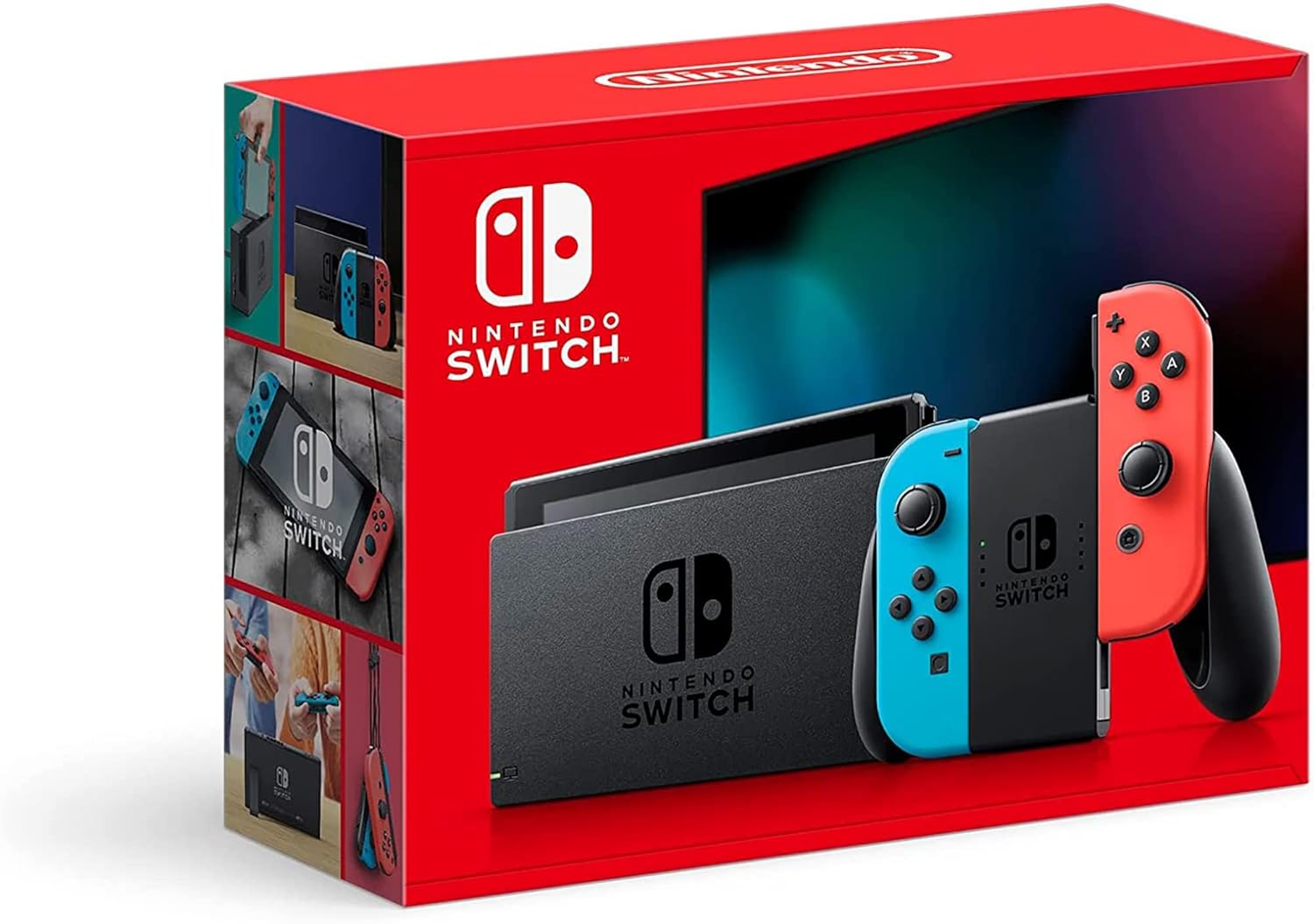
Among the various color combinations Nintendo has released for the Switch console, the Neon Blue and Neon Red Joy-Con pairing remains one of the most recognized and widely available options. This version offers the same core hybrid gaming experience that has made the Switch a fixture in many households, combined with a bold, contrasting color scheme. This article looks at what this particular configuration offers, how the console can be used across different settings, and what’s worth thinking about before choosing this option.
Key Features
Hybrid Console Functionality
Like other Switch models, this version functions as both a home console and a portable handheld device. Players can dock it to a television for traditional console-style gaming or detach it for on-the-go play, switching between modes as needed without losing progress.
Neon Blue and Neon Red Joy-Con Design
This particular bundle features Joy-Con controllers in bright neon blue (left) and neon red (right), a color combination that has become closely associated with the Switch brand since its original release and remains a popular, easily recognizable option.
Detachable and Versatile Controllers
The Joy-Con controllers can be removed from the console and used individually, combined into a single grip controller, or attached to the system for handheld play, offering flexibility depending on the gaming situation.
Tabletop Mode Support
The console includes a built-in stand that allows it to be propped upright on a flat surface, enabling tabletop play where the screen stays stationary while Joy-Con controllers are used separately, often for local multiplayer.
Touchscreen Display
The Switch’s screen supports touch input in handheld and tabletop modes, which many games incorporate for menu navigation or specific gameplay mechanics.
Broad Game Library
Over its time on the market, the Switch has accumulated an extensive game library spanning numerous genres, including many titles developed exclusively for the platform alongside third-party releases.
How It Can Be Used
Living Room Console Gaming
When docked, the system connects to a television, providing a standard home console experience for solo or multiplayer gaming in a shared living space.
On-the-Go Handheld Play
The portable nature of the Switch makes it a practical option for gaming during commutes, travel, or any scenario where a television isn’t accessible, without needing a separate device or game library.
Spontaneous Local Multiplayer
Because the Joy-Con controllers can be split between two people, the Switch supports impromptu multiplayer sessions without requiring additional controllers, which can be convenient for casual gatherings.
Family Entertainment
The console’s mix of accessible, family-friendly titles alongside more involved games makes it a common choice for shared use among family members of different ages and gaming experience levels.
Travel Companion
Many users bring the Switch along during car rides, flights, or other travel scenarios, taking advantage of its handheld mode to stay entertained without relying on a television or external display.
Who It May Be Suitable For
Households with Multiple Players
The flexibility of the Joy-Con system and the console’s broad multiplayer support make it a reasonable fit for households where more than one person regularly wants to play together.
Gamers Who Value Portability
Those who want the ability to game both at home and away, without switching between separate devices, may find the Switch’s hybrid design particularly useful.
Fans of Nintendo-Exclusive Titles
Players interested in franchises and titles unique to the Nintendo ecosystem will find the Switch necessary for accessing that specific portion of the gaming library.
Casual and Social Gamers
The console’s design lends itself well to casual, social gaming situations, from family game nights to gatherings with friends, given its easy setup for local multiplayer.
Important Things to Consider
Battery Performance
Battery life varies depending on the game being played and display brightness, so it’s worth considering charging needs for extended handheld sessions, particularly while traveling.
Joy-Con Durability
As with other Switch models, some users have reported analog stick drift developing over time with Joy-Con controllers. Staying informed about any available support options is a reasonable precaution.
Storage Expansion
Built-in storage can be limited relative to the size of some modern game downloads, and many users choose to expand storage with a compatible memory card to better accommodate a larger digital library.
Screen Visibility
The handheld screen, while functional, is smaller than a television display, which may be worth considering for games with detailed visuals or smaller on-screen text.
Accessory Compatibility
Various accessories, including additional controllers, cases, and docks, are available separately, and checking compatibility with this specific model is a reasonable step when planning a broader setup.
Comparison of General Categories
Traditional Home Consoles
These systems are built solely for television connection, generally offering more processing power but without the portability that defines hybrid systems.
Dedicated Handheld Systems
These prioritize portability exclusively, without the option to connect to a larger screen, differing from the Switch’s dual-mode approach.
Hybrid Consoles
This category, including the Switch, blends home and portable gaming into a single device, trading some raw performance for added flexibility.
Mobile and App-Based Gaming
Smartphones and tablets offer a different form of portable gaming, generally built around app stores rather than the more traditional game library structure found on dedicated consoles.
Frequently Asked Questions
Can the Joy-Con controllers be replaced individually if needed?
Yes, Joy-Con controllers are generally available for individual purchase, allowing replacement without needing to buy an entirely new console bundle.
Does the neon blue and red color combination affect the console’s functionality?
No, the color scheme is purely aesthetic and has no impact on performance or features.
Is this version compatible with the same games as other Switch color variants?
Yes, game compatibility is determined by the console hardware and software, not the color of the Joy-Con controllers, so this version supports the same game library as other standard Switch models.
Can additional Joy-Con controllers be purchased for more players?
Yes, additional Joy-Con or compatible Pro Controllers can be purchased separately to support more players in compatible multiplayer games.
How is the console charged?
The Switch is typically charged either through its dock when connected to a television or directly via a USB-C charging cable when used independently.
Is expandable storage necessary for most users?
This depends on how many games are downloaded digitally. Users with smaller libraries may not need expanded storage, while those with extensive digital collections may benefit from a compatible memory card.
Conclusion
The Nintendo Switch with Neon Blue and Neon Red Joy-Con offers the same flexible, hybrid gaming experience found across the Switch lineup, paired with one of the platform’s most recognizable color combinations. Its ability to move seamlessly between docked and handheld play, combined with a broad and varied game library, continues to make it a practical choice for individuals, families, and casual gaming groups alike. As with any console decision, considering personal gaming habits, multiplayer needs, and portability preferences will help determine whether this configuration is the right fit.